HOW MUCH SHOULD YOU CHARGE?
Alex was asked by Beta Corp for a plan to fix their social media pages.
Alex told them a fair price for six months of important work.
The trouble started because Beta Corp wanted to pay less money.
Alex needed the money, so Alex said yes to a very small job.
As soon as the work started, the job became very, very big.
Beta Corp asked Alex for big, extra jobs for the same small price.
Alex felt tired and angry, and this good work started to become bad work.
The light bulb went off in Alex’s head:
Alex was not earning money;
Alex was paying a Stress Tax to keep a bad customer.
Alex bravely decided to stop working for Beta Corp.
Alex knew that feeling bad for a short time was much better than being tired forever.
This story shows that Cheap work makes problems, not money.
PRICE VERSUS HELP
When a customer only talks about the small price, they don’t understand the big help you give them.
You must ask yourself if you are charging for your hours, or for the good results you get.
You must remember that the helper who knows what they are doing must be respected.

Someone smart once said: “If you think a professional is expensive, wait until you hire an amateur.” (Melissa Faye)
It is also true that paying for help is an “Investment.” (Pete Van Bloem)

You should only work with people who understand how important your skills are.
You can use these smart ideas to pick the right customers and set your price:
You can ask the customer to compare what they expect with what they want to pay.
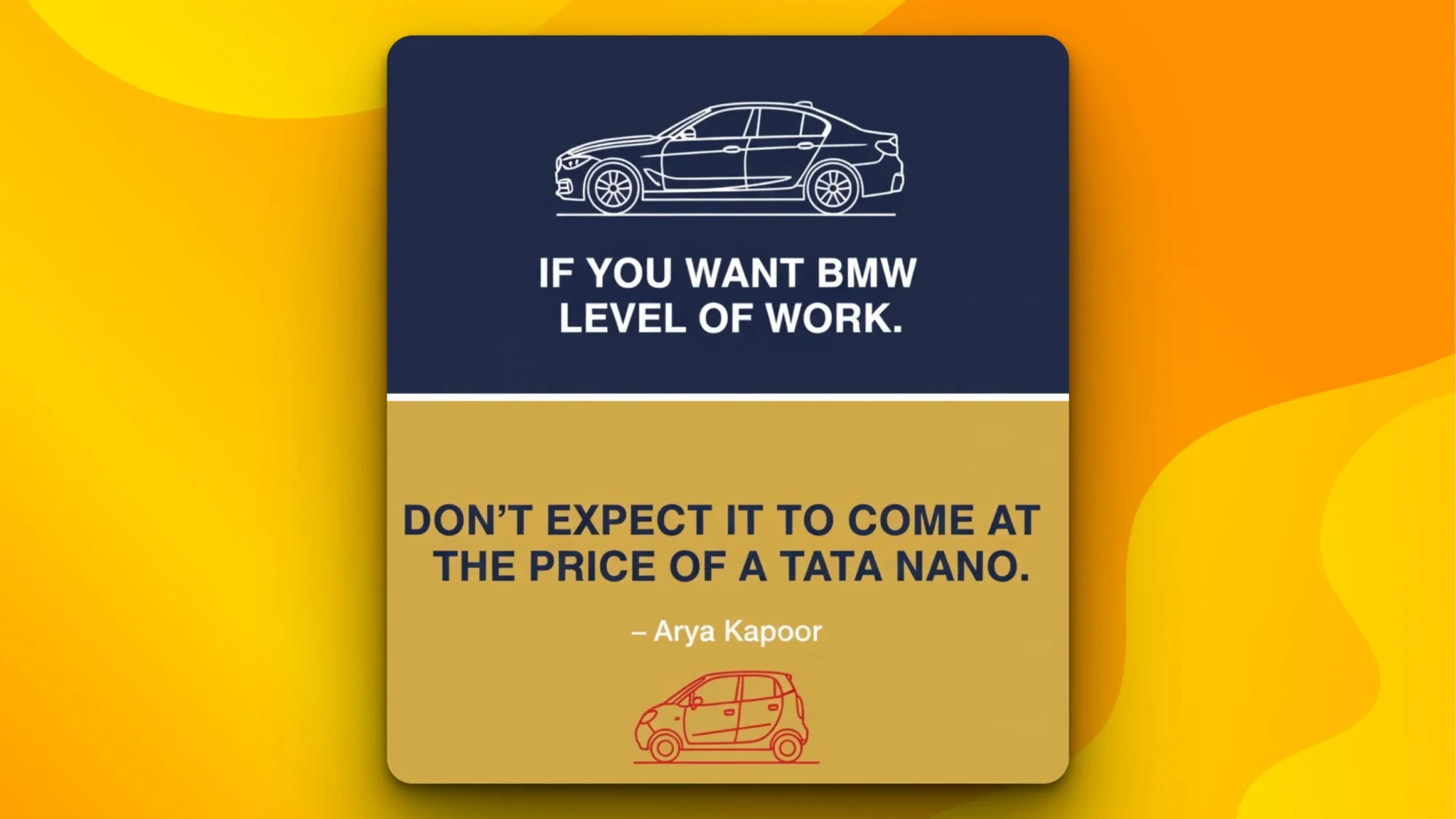
Another smart person said: “If you want BMW level of work, don’t expect it to come at the price of a TATA Nano” (Arya Kapoor, citing a mentor)
See what they say when you tell them your price because it shows you what kind of partner they will be.
One professional said: “The lower the budget, the higher the stress. Value-aware clients never ask, ‘Why should I pay this much?’ they ask ‘How can we make this work?’” (Sufiyan Guttoo)

The customers who want the lowest price will often cause you the biggest problems.
The customers who understand the help you give will focus on how much money they can make later.
NOW, YOU DECIDE
Think about all your customers right now.
Are you doing your very best work for the price of a cheap toy?
What is the biggest true cost of saying “yes” to the cheapest project?
What is the first brave thing you will do this week to show everyone that you are worth a lot?
Disclaimer: The story above is purely hypothetical and intended to mirror common realities within the creative and marketing industries. Details are intentionally generic to protect the privacy and identity of all real-world individuals and businesses that may have experienced similar situations.